
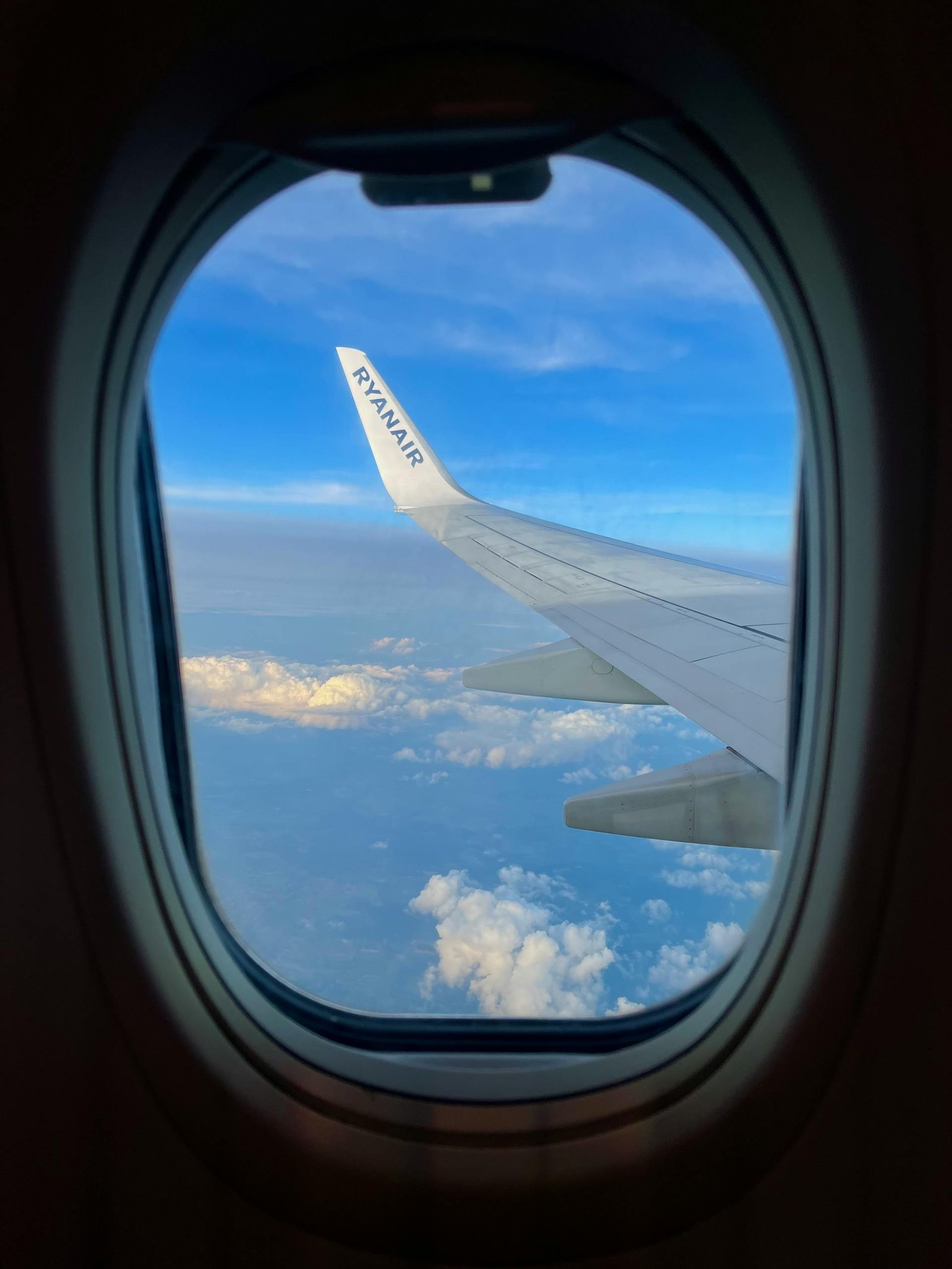
My first international flight was about 35 years ago, to a South American country. I’d taken a few Spanish classes beforehand, but I was nowhere near able to actually communicate — I knew “hello” and “goodbye” and not much past that. I learned more about what a first international flight actually feels like in those two days than any guide could have told me. Three things stood out, and all three are still worth knowing if this is your first time too.
Long-Haul Is a Different Animal Than a Domestic Hop
Up to that point, my flights had been the usual two- or three-hour domestic kind. This one ran over nine hours, and I wasn’t ready for it. This was also before seatback screens or onboard Wi-Fi existed, so there was no built-in entertainment to fall back on. I tried to sleep and couldn’t get comfortable. I tried to read, but it was a nighttime flight, the cabin was dark, and I felt bad turning on my overhead light with everyone else trying to sleep, so I just sat there instead. Bored, uncomfortable, hungry, and wishing I’d packed snacks.
Most planes have seatback entertainment now, and many offer Wi-Fi, but neither is guaranteed, and Wi-Fi is often paid and unreliable over open ocean. The lesson holds regardless: on anything over about six hours, pack your own entertainment (downloaded, not dependent on a signal) and real snacks, not just what the airline happens to serve on its schedule, not yours.
Some Long-Haul Routes Still Make Unscheduled Stops
Partway through that flight, the plane landed at an airport along the route, likely to refuel and swap passengers. The crew let us get off and wait in a small terminal building, which I was genuinely excited about, until I stepped off the boarding stairs onto the tarmac and saw military personnel stationed along painted guide-lines, rifles slung across their chests. I kept my eyes forward and walked straight to the waiting area. The stop lasted maybe half an hour before we reboarded and continued on.
Need your documents sorted too? Travel Documents: Passports, Visas & Permits →
Modern long-haul aircraft can fly farther without refueling than what was common 35 years ago, so a stop like that is less common now, but it still happens on some routes. If your itinerary shows a stop you didn’t expect, or armed personnel at a foreign airport catch you off guard, that’s a normal reaction, not a sign anything’s wrong. It’s rarely about you personally. Stay calm, keep your documents on you, and follow the crew’s instructions.
The Immigration Booth Doesn’t Require Fluency
By the time I reached immigration at my actual destination, my two phrases of Spanish weren’t going to get me through a conversation. So I didn’t try to have one. I handed the officer my passport, waited while he looked it over, and he stamped it with a bang and handed it back. That was the whole interaction. I’ve since become fluent in Spanish, and I haven’t had a layover quite like that first one since, but the actual lesson isn’t about the language: you don’t need fluency to get through immigration. Have your passport ready, answer what’s asked as best you can, and let the officer lead the interaction.
For the paperwork side of this stage, see our guide to passports, visas, and entry permits — including which countries require your passport to stay valid well beyond your trip, which varies by destination and is worth confirming before you fly, not at the counter.
FAQ: Addressing Common Concerns
- How early should I arrive at the airport? For international flights, aim for at least three hours before departure to account for check-in, security, and potential delays.
- Do I need travel insurance? It’s not mandatory, but coverage for medical emergencies, trip cancellations, and lost luggage is worth having on a first international trip specifically because you don’t yet know what “normal” looks like if something goes wrong. Comparing plans before you book is worth the ten minutes it takes.
- How do I handle jet lag? Stay hydrated during the flight and get natural light at your destination as soon as you can after landing — both help reset your body’s clock faster than staying indoors and waiting it out.
- What if my luggage is delayed? Go to the airline’s baggage service desk before you leave the airport, not after. Most carriers can offer some compensation for essential items while you wait, but you generally have to file the report in person, at the airport, that day.
This article is for informational purposes only. Always verify current travel information, visa requirements, entry rules, and health guidance with official government sources before making travel decisions.
This article is for informational and educational purposes only. Always verify current travel requirements with official government sources before making travel decisions.
Your next step
When to Buy Travel Insurance and What to Compare →