
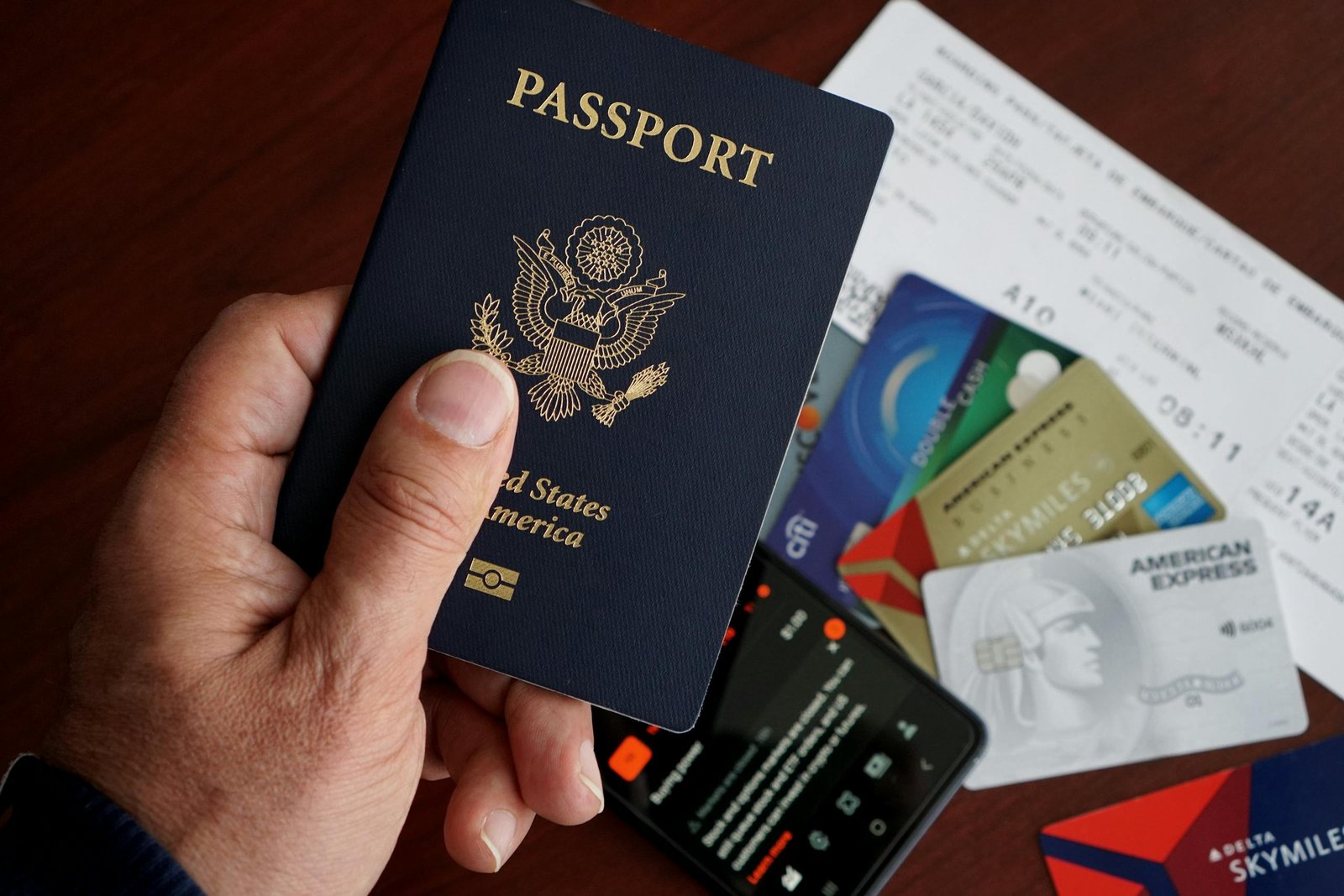
I once overheard the whole process start at a local Post Office. A customer ahead of me in line mentioned to the clerk that she was about to go on a cruise. The clerk asked, routinely, whether she had a passport. “Why would I need a passport?” she said, genuinely surprised — a common assumption with cruises that feel domestic but still call at foreign ports. The clerk didn’t miss a beat: explained why, and handed her a paper application on the spot.
Where First-Time Applicants Actually Start
For most first-time applicants, the process starts somewhere ordinary: a local Post Office. Many branches keep hard copies of Form DS-11, the passport application, on hand, and the postal worker behind the counter will often walk you through what’s needed in a couple of minutes, the same way the clerk did in the story above. You don’t need a specialist to get started — you need the right documents and about fifteen minutes at a counter that’s probably already in your neighborhood.
Form DS-11 has to be completed and submitted in person at an acceptance facility — a Post Office or clerk of court, most commonly — for every first-time applicant, regardless of age. Bring proof of U.S. citizenship (a certified birth certificate, a previous passport, or a consular report of birth abroad) and a government-issued photo ID. Without both, the application gets returned and you’ll be starting over.
Passport Photos: Skip the Guesswork
The photo requirements are specific — 2×2 inches, plain white background, no headgear unless it’s for religious reasons, neutral expression — and a photo that misses any of them gets your whole application sent back. Rather than trying to shoot one at home against a bedsheet, most first-time applicants just walk into a CVS or Walgreens. Both chains run a photo lab as part of their pharmacy counter, usually with a small setup already built for exactly this: sometimes a pull-down white screen, a tech who takes the digital photo on the spot, and a print sized to spec a few minutes later. It’s a five-minute stop, and it removes the guesswork entirely.
Need a way to protect your documents? Your Travel Document Backup Safety System →
Passport Book vs. Card: What You’re Actually Paying For
The passport book is what most people picture — the stamped booklet, valid for any international travel by air, land, or sea. For a first-time adult applicant, that’s a $130 application fee plus a $35 execution fee paid to the acceptance facility, $165 total. The passport card is a wallet-sized alternative, but a limited one: it only works for land or sea entry to Canada, Mexico, the Caribbean, and Bermuda, never for air travel. It runs $30 application plus the same $35 execution fee, $65 total. Applying for both together costs $160 application plus $35 execution, $195 total — cheaper than the two separately, but still real money, so it’s worth deciding based on what you’ll actually use rather than defaulting to both.
Minors under 16 pay less, not more: $100 application for the book, $15 for the card, plus the same $35 execution fee either way. Fees are set by the U.S. Department of State and change periodically — confirm the current amounts on the official passport fee schedule before you apply. A parent or guardian has to appear in person with the child and provide proof of citizenship and identity for both.
If your travel plans stay close to home — a drive across the Canadian border, a cruise through the Caribbean — the card can cover it for less money. If there’s any chance you’ll fly internationally, even once, get the book. You can always add the card later, but there’s no version of “just flying somewhere” that the card alone covers.
Plan Around the Timeline, Not the Other Way Around
Routine processing currently runs 4–6 weeks, and expedited service cuts that to 2–3 weeks for an additional $60. Both figures are processing time only — add mailing time on each end, and a routine application can realistically take 8–10 weeks start to finish. Both fees and processing times are revised periodically, so check the State Department’s current processing times before you book travel that depends on them. If you think there’s any chance you’ll need a passport, start the process as soon as your travel plans firm up rather than waiting until a trip is booked. Paying $60 to expedite a passport you needed weeks ago is a worse outcome than simply starting early.
One planning detail worth checking per destination: many countries require your passport to stay valid for at least six months beyond your trip, separate from the entry rules the Schengen zone uses. It varies by country, so it’s worth confirming for wherever you’re actually headed rather than assuming one rule applies everywhere.
If Something Goes Wrong Abroad: the Embassy Safety Net
Years ago, on a trip in South America, I lost my passport along with some other personal items. It could have derailed the whole trip. Instead, I went to the U.S. Embassy in the country I was visiting, explained what happened, and showed the one piece of ID I hadn’t lost. The staff confirmed who I was and processed a replacement passport, one valid for the rest of that trip and for re-entry to the U.S. It’s not a fast or free process — it takes real time at the embassy and isn’t something to plan around — but it exists for exactly this situation, and it worked.
If you’re ever in that position, your local U.S. embassy or consulate is the first call to make, not a travel agent or your airline. Keep a copy of your passport information page somewhere separate from the passport itself — a photo on your phone, an email to yourself — since it’s exactly what an embassy will ask to see first.
Before and After This Step
Once your passport is sorted, the next thing worth checking is whether your destination needs anything beyond it — see our guide to checking visa requirements before booking. And since a lost passport is exactly the kind of thing worth planning for before it happens, our document backup system guide is the natural next read. If you don’t have a planning document to track any of this against yet, our Free Trip Planner Starter gives you a structure to start from.
This article is for informational and educational purposes only. Always verify current travel requirements with official government sources before making travel decisions.
Your next step
How to Check Visa Requirements Before Booking →