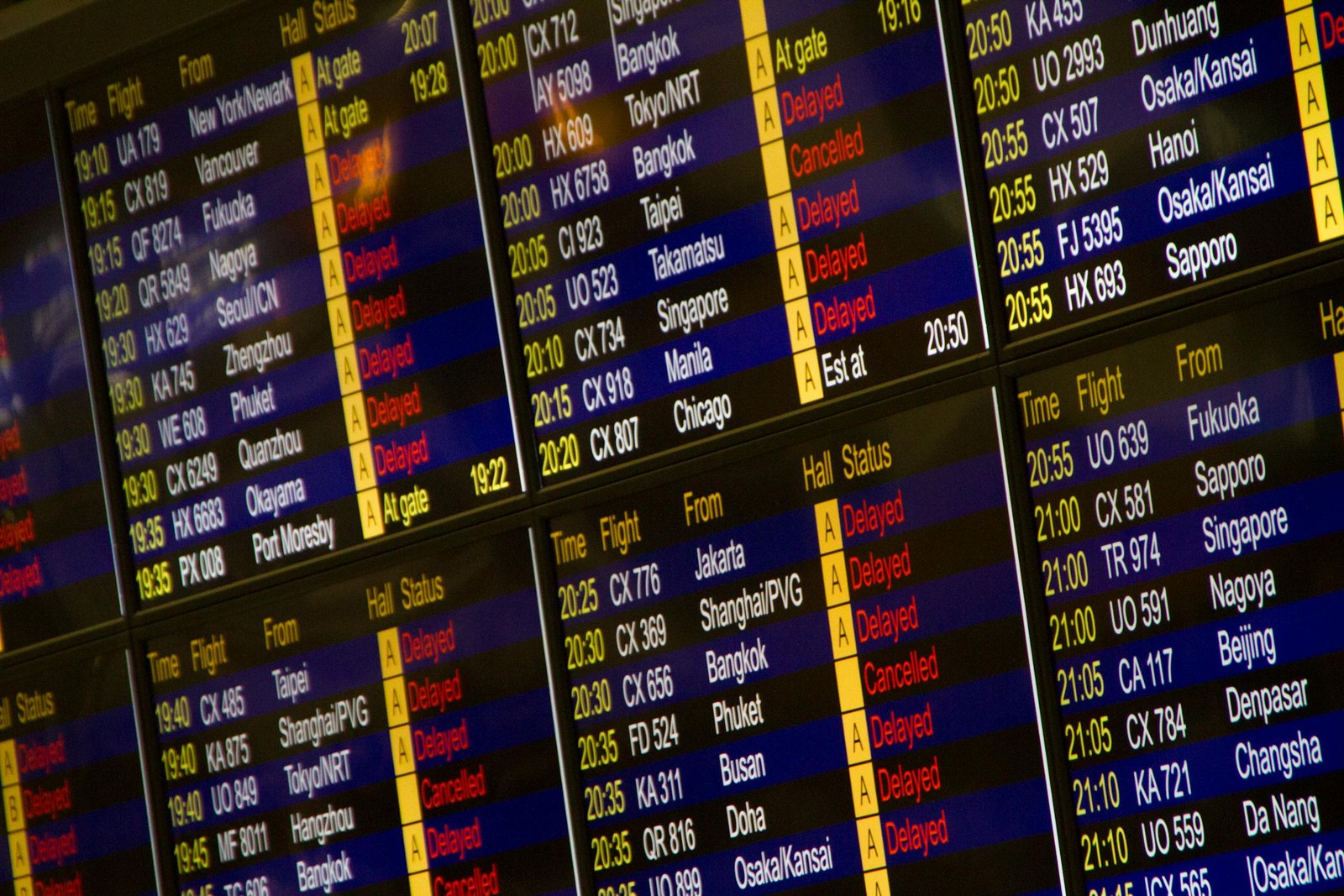
Picture this: you’re standing in the terminal, your flight’s departure time now a distant memory. The airport buzzes with stressed travelers, each clutching boarding passes for flights that have vanished from the schedule. This is the reality for millions of air travelers each year, as cancellations and delays disrupt itineraries and test patience. Understanding how to navigate these disruptions is not just about convenience—it’s about reclaiming control in a system that often feels chaotic. From leveraging credit card protections to knowing when to insist on a refund, the path forward is clearer than it might seem.
Understanding the Root Causes of Cancellations and Delays
Weather is the most obvious culprit behind flight disruptions, but it’s far from the only one. Unpredictable storms, snowfall, or fog can force airlines to cancel flights or ground aircraft for safety. However, even in regions with seemingly ideal conditions, delays can ripple through the network due to cascading effects. For example, a storm in the Midwest might strand planes in Texas, creating delays for passengers in California. The U.S. Federal Aviation Administration attributes roughly 70% of national airspace system delay to weather, but the remaining 30% stem from less visible factors.
Air traffic control staffing shortages have emerged as a critical issue, particularly in high-traffic hubs like New York. As of 2024, the FAA has exceeded its hiring goals for the year but still faces a void in experienced controllers. In 2023, New York-area airports had to shift flights from Newark to Philadelphia’s airspace, a temporary fix that strained resources. Airlines, in turn, have been permitted to reduce schedules in these regions without penalty, a policy that has led to chronic understaffing. This creates a bottleneck effect: fewer controllers mean longer wait times for takeoffs and landings, even in regions unaffected by weather.
Staffing challenges extend beyond air traffic control. Airlines themselves have grappled with pilot shortages, a problem exacerbated by rapid growth in the industry. While hiring has accelerated in recent years, the training pipeline lags. This has forced carriers to cancel or delay flights, particularly during peak travel seasons. Passengers in the New York metro area have been disproportionately affected, with the FAA granting slot waivers so carriers could trim schedules there rather than run flights they could not reliably staff. These systemic issues underscore the importance of proactive planning and understanding your rights as a traveler.
Want travel insurance before next flight? When to Buy Travel Insurance and What to Compare →
The good news is that airlines are improving their responsiveness. In 2023, major carriers began investing in predictive analytics to anticipate delays and reroute flights more efficiently. However, these tools are most effective for uncontrollable disruptions. For delays caused by staffing shortages or scheduling errors, travelers must rely on their own strategies to minimize inconvenience.
Immediate Steps to Take When Your Flight Is Disrupted
The first rule of thumb is to remain at the airport unless you’ve secured a definitive new departure time. It is worth being precise about what you are actually owed here, because this is widely misunderstood: for flights covered by U.S. Department of Transportation (DOT) rules, no federal regulation requires an airline to give you a meal, a hotel room, or ground transportation—ever. What does exist is a set of public commitments. Every one of the ten largest U.S. carriers has committed to DOT that it will provide meals for controllable delays of three hours or more, and a hotel room plus transport to it for controllable overnight disruptions. DOT publishes and enforces those commitments on its Airline Customer Service Dashboard.
The word doing the work in every one of those commitments is controllable. A crew scheduling error, a maintenance problem, or an IT outage is controllable and triggers the commitment. Weather and air traffic control are not, and no carrier commits to cover expenses in those cases. So the practical question to ask at the desk is not “what am I entitled to?” but “is this delay controllable?” — and then to ask for the specific commitment your airline has published. Get the answer in writing where you can.
Rebooking is the next priority. Airlines typically offer free rebooking on their own flights, but this doesn’t always include same-day flights. For instance, a delayed morning flight might not secure you a spot on an afternoon departure, especially on popular routes. In such cases, consider transferring your ticket to another airline. Several large carriers have committed to DOT that they will rebook you on another airline at no additional cost when the disruption is controllable, though this is again a published commitment rather than a legal requirement, and the carriers that offer it do not all offer it on the same terms. Check your airline’s entry on the DOT dashboard before you assume it applies. This is particularly useful for travelers with flexible itineraries who can afford to wait for a better connection.
Communication is key. Airlines often release updates through their mobile apps or websites, but these can be delayed or inconsistent. Signing up for text or email alerts ensures you receive the latest information. For example, Delta’s SkyMiles app sends push notifications for gate changes, while United’s app allows you to track your flight’s status in real time. If you’re unsure about your options, don’t hesitate to ask for a supervisor or manager—they have more authority to resolve issues than frontline staff.
Finally, document everything. Take screenshots of your itinerary, boarding pass, and any communication with the airline. This becomes crucial if you need to dispute a denied request for compensation or a refund. Airlines are more likely to comply with reasonable demands when presented with clear evidence of a disruption. Consider creating a digital folder in your phone or email to store these records, making them easily accessible if needed.
Leveraging Financial Protections and Travel Insurance
Credit cards with travel protections can be a lifeline in these situations. Cards like the Chase Sapphire Preferred or Amex Platinum offer reimbursement for incidental expenses such as hotel stays or meals during delays. However, these benefits typically require you to book the flight directly with the credit card. For example, if you used a third-party booking site and then faced a cancellation, your credit card company might not cover the costs. Always confirm the terms of your card’s travel insurance before booking.
Travel insurance is another layer of defense. Policies from providers like Generali Global Assistance include coverage for flight cancellations caused by adverse weather, mechanical failures, or labor strikes. These plans often reimburse non-refundable expenses, such as hotel bookings or tour packages. For instance, if a snowstorm in Denver forces you to cancel a ski trip, your insurance might cover the cost of the lift tickets you won’t use. It’s essential to read the fine print, as some policies exclude coverage for delays under certain hours or require immediate reporting of the incident.
Your strongest protection under U.S. rules is the refund right, and it is stronger than most travelers realize. If your airline cancels or significantly changes your flight and you decline the alternative offered, you are owed an automatic refund of the unused portion—in your original form of payment, not a voucher, and not only if you ask. DOT defines a significant change as a departure or arrival time moving by more than three hours domestically or more than six hours internationally, plus changes such as a different departure or arrival airport, an added connection, or a downgrade in class of service.
Critically, this refund right does not depend on the cause. A weather cancellation still owes you a refund if you choose not to travel. What weather does change is everything else—the meals, the hotel, the rebooking courtesies—because those rest on the controllable-versus-uncontrollable distinction above. The gap worth insuring against is therefore not the ticket price, which is already protected, but the non-refundable costs stacked on top of it: the hotel you never checked into, the tour you missed, the extra nights you did not plan to pay for.
When purchasing travel insurance, opt for a plan that includes 24/7 assistance. Providers like Generali offer round-the-clock support to help with rebooking, finding accommodations, or navigating visa issues if a delay forces an unexpected overstay. This service can be particularly valuable when dealing with international travel, where language barriers and complex regulations add layers of difficulty.
Navigating the Airport During Delays
Staying at the airport is often the most practical solution for short delays. Most major airports offer amenities like food courts, lounges, and charging stations to keep passengers comfortable. For example, Atlanta’s Hartsfield-Jackson International Airport has over 100 dining options and 14 lounges, many of which are accessible to all travelers. If you have a premium credit card, consider using a lounge for complimentary meals, Wi-Fi, and showers to make the wait more bearable.
For overnight delays, securing a room is the priority. There is no universal hour threshold that obliges an airline to house you—the trigger is whether the disruption was controllable and forces an overnight stay, and where a carrier does provide a room it is typically a contracted airport hotel rather than your choice of property. If the delay is weather-driven, assume from the outset that the room is yours to arrange and pay for. Book it early: when a bank of flights cancels at once, the airport hotels fill within the hour, and last-minute booking apps such as HotelTonight or the major booking platforms are competing against everyone else on your flight. Check your credit card’s travel protections before you book, since reimbursement often depends on how the room was paid for.
Staying informed is equally important. Download the airline’s app to track updates, and follow the airport’s social media channels for announcements. For instance, JFK Airport’s Twitter account regularly updates passengers on gate changes and security wait times. If the airline fails to provide timely information, escalate the issue to a supervisor or manager. They have more authority to resolve disputes and may be able to expedite your rebooking.
Lastly, consider your mode of transportation. If you need to leave the airport for a hotel or to reschedule, use a ride-sharing service like Uber or Lyft. These services often offer discounted rates for airport transfers, and their apps allow you to track your driver’s location in real time. Avoid taxis if possible, as they can be more expensive and less reliable during high-traffic periods.
Adjusting Your Travel Plans for Long-Term Disruptions
When cancellations or delays extend beyond a day, reassessing your entire itinerary becomes necessary. If you have a non-refundable hotel booking or tour, contact the provider immediately. Many hotels offer flexible cancellation policies during peak travel periods, and tour operators may allow changes to dates or destinations. For example, a ski resort in Colorado might let you reschedule a stay from January to February if a snowstorm forces a delay.
Flexible travel dates are another critical consideration. If your flight was canceled due to weather, consider shifting your departure by a day or two. Airlines often have more available seats on off-peak flights, and you may even find better prices. Tools like Google Flights or Skyscanner can help identify cheaper alternatives, especially if the delay gives you extra time to research options.
Documenting every communication with the airline is essential. Save emails, text messages, and screenshots of any interactions. If you need to dispute a denied request for compensation or a refund, having a paper trail strengthens your case. Airlines are more likely to comply with reasonable demands when presented with clear evidence of a disruption.
Finally, consider alternative modes of transportation. If your flight is canceled due to a domestic issue, a train or bus might be a viable option. For international travel, a ferry or a connecting flight through a different hub could work. Always verify visa requirements and entry rules for any alternate route to avoid further complications.
If You’re Flying To or From Europe, Different Rules Apply
Everything above describes U.S. DOT rules. If your flight departs from an airport in the European Union—or arrives in the EU on an EU-based carrier—you may instead be covered by EU Regulation 261/2004, which is considerably more generous and works on a different principle entirely.
Under EU261, the airline’s duty of care—meals, refreshments, and hotel accommodation with transport when an overnight stay is required—is a genuine legal obligation rather than a voluntary commitment, and it applies even in extraordinary circumstances such as weather. Separately, for delays at arrival of three hours or more, EU261 provides fixed cash compensation of roughly €250 to €600 depending on flight distance—though this compensation, unlike the duty of care, does not apply when the cause was genuinely outside the airline’s control.
This matters more than it might seem, because it means the same disruption can produce completely different outcomes depending on which direction you are flying. A weather delay leaving Chicago leaves you paying for your own hotel. The same weather delay leaving Madrid obliges the airline to house you. The UK operates a near-identical scheme, UK261, for flights departing the UK. If your itinerary touches Europe at any point, check which regime governs each leg before you assume the U.S. rules are all that apply.
If this is your first long-haul trip, it helps to know what the normal version looks like before planning for the version that goes wrong. Your first international flight: what to expect walks through each stage in order.
Frequently Asked Questions About Flight Cancellations and Delays
What should I do if my flight is canceled and I don’t have travel insurance?
Start by rebooking with the airline at no additional cost. If the cancellation is due to an operational error, ask for compensation. Without insurance, you may need to cover incidental expenses yourself, but some credit cards offer travel protections. Check with your card issuer to see if they can reimburse hotel stays or meals.
Is the airline required to pay for my hotel stay during a delay?
No U.S. regulation requires it. What exists is your airline’s own published commitment to DOT, and every major U.S. carrier has committed to providing a hotel for controllable overnight disruptions—a maintenance issue or crew shortage, for example. Weather and air traffic control fall outside those commitments, and in those cases the cost is normally yours, recoverable only through a credit card benefit or travel insurance. Ask the agent directly whether the airline is classifying the disruption as controllable, and get the answer in writing before you book a room.
Can I get a refund if my flight is delayed but not canceled?
Yes, once the delay crosses DOT’s significant-change threshold: more than three hours on a domestic flight, or more than six hours on an international one. At that point, if you decline the airline’s alternative, you are owed an automatic refund to your original payment method regardless of what caused the delay. You should not have to argue for it, but if it does not appear, request it in writing and keep documentation of the original and revised times.
What if I need to leave the airport but can’t find a hotel?
Use a ride-sharing app to reach a nearby hotel, and check if your credit card company offers coverage for lodging. Many premium cards reimburse incidental expenses during delays. If you’re stranded without access to these benefits, consider alternative accommodations like a budget hotel or a hostel. Always confirm with the airline that they can assist with transportation costs if you need to return to the airport later.
Last verified: August 23, 2026. Sources: U.S. Department of Transportation (airline customer service dashboard and refund rules); European Commission (Regulation 261/2004 air passenger rights); Federal Aviation Administration (delay causes). Passenger-rights rules and individual airline commitments change—confirm current terms with your carrier and with DOT before relying on them.
This article is for informational and educational purposes only. Always verify current travel information, visa requirements, entry rules, and health guidance with official government sources and qualified professionals before making travel decisions.
Your next step
Airline Check-In Guide: Avoid Surprises →