
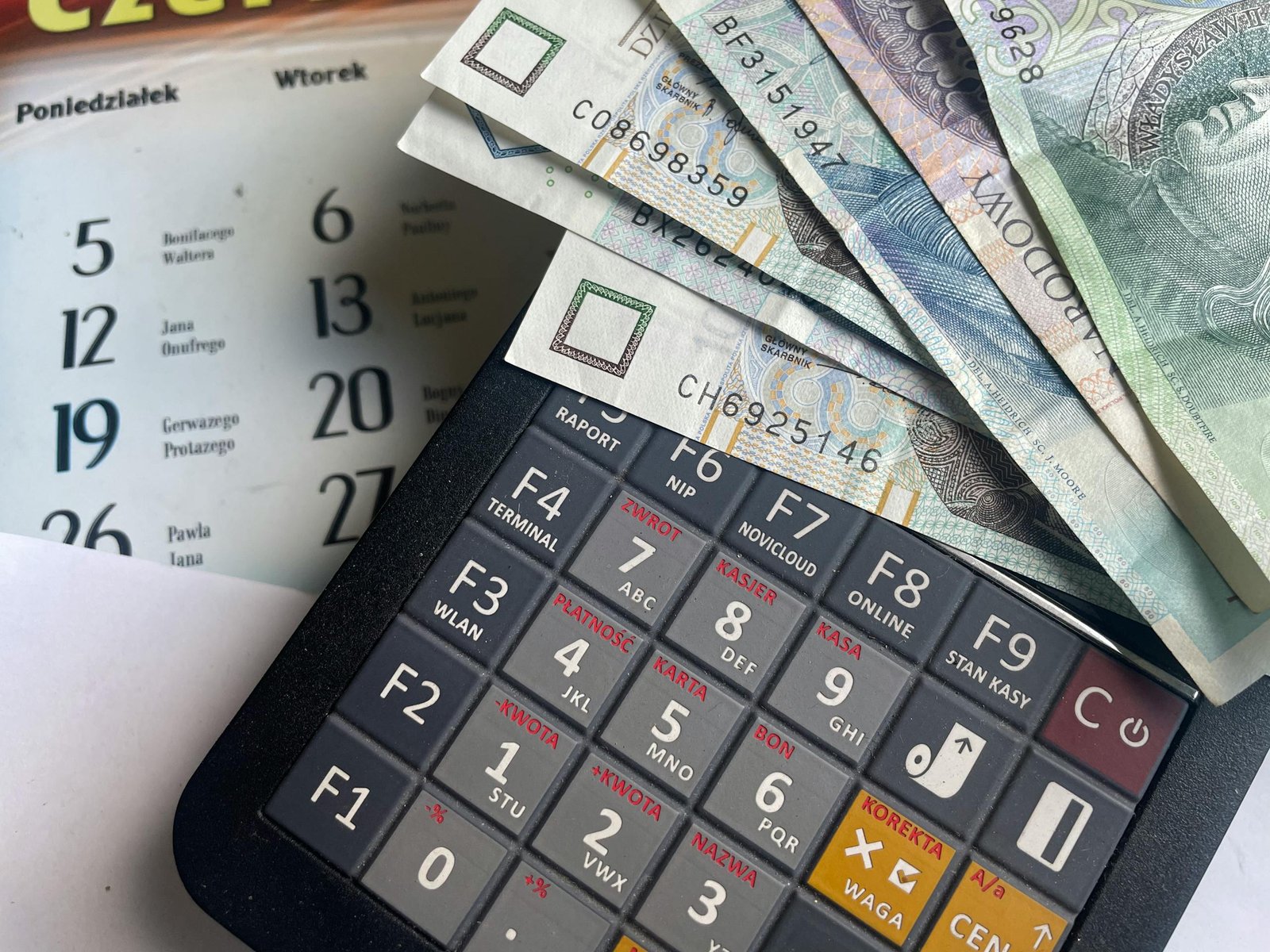
In 2022, a traveler named Sarah booked a dream trip to Japan, only to return home $4,000 in debt. She’d assumed her modest savings would cover Tokyo’s temples and Osaka’s street food, but she overlooked flight surges, overpaid for “last-minute” accommodations, and let the allure of luxury ramen justify daily splurges. Three years later, after applying the strategies outlined in this guide, Sarah returned to Kyoto with a $1,200 budget—and a $200 buffer. The secret? A methodical approach to budgeting that balances ambition with arithmetic.
Assessing Your Financial Landscape
Before you can allocate funds for a Bali beach resort or a Trans-Siberian Railway pass, you must first understand your financial starting line. This isn’t about wishful thinking—it’s about confronting your cash flow with the same rigor you’d apply to planning a complex itinerary. Start by calculating your net savings: subtract debts (credit cards, student loans, mortgages) from liquid assets (checking accounts, investment accounts). If you’re aiming to travel in 12 months, divide that number by 12 to determine your monthly savings capacity. For example, if you have $6,000 in savings and $2,000 in debt, your monthly travel fund might realistically be $333.
Consider your income stability. A freelance graphic designer with irregular paychecks will approach budgeting differently than a salaried accountant. Use the 50/30/20 rule as a baseline: allocate 50% of post-tax income to essentials (rent, groceries), 30% to discretionary spending (travel, dining), and 20% to savings and debt. If your discretionary bucket is $500/month, you could save $6,000 for a one-year trip—but if you’re paying off $10,000 in credit card debt, that math shifts dramatically.
Tools like Mint or YNAB (You Need A Budget) can automate this process, but the simplest method is a spreadsheet. List all monthly expenses, then subtract them from income. Whatever remains is your travel fund. If it’s not enough for your dream trip, ask yourself: Can I delay the trip by six months? Can I take a shorter destination? Can I trade a private room in Lisbon for a shared hostel in Lisbon?
The goal isn’t austerity—it’s clarity. Once you’ve mapped your finances, you’ll know whether you’re working with a $5,000 budget or a $500 one, and how to bridge the gap. This foundation prevents the desperation that leads to impulse bookings and debt accumulation.
Breaking Down the Costs
Travel expenses fall into three categories: fixed, variable, and hidden. Fixed costs—like airfare and hotels—are the easiest to estimate but often the most volatile. Use Skyscanner’s “whole month” feature to track flight trends; if prices to Paris spike in July, consider visiting in May or September. For accommodation, Hostelworld’s filters let you compare dorm beds in $20/night hostels with boutique hotels at $200/night. Multiply these by your stay’s duration to get a baseline.
- Fixed Costs: Flights, hotels, train tickets
- Variable Costs: Food, tours, transportation
- Hidden Costs: Travel insurance, visa fees, luggage
Variable costs require guesswork. A meal in Bangkok might cost $5 at a street vendor or $50 at a Michelin-starred outpost. Allocate an average of $30/day for food in mid-range cities, adjusting up or down based on research. Tours and activities are trickier: a day tour of Machu Picchu costs $150, while a free walking tour in Barcelona might suffice. Use sites like GetYourGuide to compare options and book in advance for discounts.
Then there are the hidden costs that trip planners often forget. Travel insurance, for instance, can add 5-10% to your trip cost but could save you $10,000 in medical bills. Visa fees for countries like Japan ($30) or Russia ($160) add up quickly. Even luggage matters: a last-minute need for a sturdy suitcase can eat into your budget. Factor these in, or risk being blindsided mid-trip.
By categorizing your expenses, you create a roadmap. If you’ve budgeted $2,000 for Southeast Asia, you might allocate $800 to flights, $600 to accommodation, $400 to food, and $200 to activities. This breakdown makes overspending visible. Did you blow through your food budget in the first week? You’ll know to cut back on tours next week, not panic-buy souvenirs.
Prioritizing Experiences Over Expenses
Travel budgeting is as much about psychology as arithmetic. A $1,500 trip to Morocco might seem feasible until you realize that includes a $900 flight and a $600 stay at a luxury Riad. The solution? Define your non-negotiables. For some, it’s a private villa with a view of the Atlas Mountains; for others, it’s the cultural immersion of a budget guesthouse. Ask yourself: What experiences would make this trip unforgettable? Is it the $200 camel ride in the Sahara, or the $20 tagine at a local market?
Consider the Pareto Principle: 80% of your satisfaction often comes from 20% of your spending. If you’re in Kyoto for cherry blossoms, splurging on a traditional tea ceremony or a stay in a centuries-old machiya townhouse might be worth the cost. But if you’re in Reykjavik for the Northern Lights, you might prioritize a cozy cabin near the Golden Circle over a luxury hotel in the city center.
Trade-offs are inevitable. A $2,000 budget to Europe might mean flying into a secondary airport (like Nantes instead of Paris-CDG) and staying in a hostel with a kitchen. You’ll save on food costs, which can be 30-50% of your daily budget. Or, if you prioritize comfort, you might book a mid-range hotel in Rome and use that saved money for a guided Colosseum tour. The key is to align every dollar with your core travel goals.
This prioritization also applies to timing. If you’re deadset on visiting Patagonia during peak season (November-February), you’ll pay a premium for flights and hotels. But if you’re flexible, visiting in April means cheaper prices and fewer crowds. The same logic applies to events: a $1,000 budget won’t stretch to a Glastonbury Festival ticket, but it could cover a trip to a smaller, local music festival with similar vibes.
By focusing on what truly matters to you, you turn a rigid budget into a flexible framework. It’s not about cutting costs—it’s about spending strategically, ensuring every dollar enhances your experience rather than draining your bank account.
Sticking to the Plan (Without Feeling Restricted)
Having a budget is like having a GPS; ignoring it just because the road is scenic won’t get you to your destination. The first rule of sticking to your plan is tracking expenses in real time. Apps like Trail Wallet let you log every euro spent on gelato in Florence or every won spent on a Seoul subway ride. This visibility prevents the “I don’t know where the money went” trap that leaves travelers scrambling for cash mid-trip.
Another tactic is the 80/20 rule for spending: allocate 80% of your budget to experiences you care about and 20% for spontaneous adventures. If you’ve budgeted $50/day in Lisbon, spend $40 on a guided Sintra tour and $10 on a last-minute boat trip to the Berlengas Islands. This structure gives you freedom without guilt. It also helps to set daily limits—when your $30 food budget is gone, opt for a free walking tour instead of that overpriced seafood platter.
Credit cards and travel rewards can be allies if used wisely. A card offering 2% cashback on travel purchases effectively gives you a 2% discount on everything from flights to hotels. But avoid the trap of charging everything to a card you can’t pay off monthly. Sarah’s debt crisis began when she maxed out her card for Tokyo, assuming rewards would cover the cost. Cash or debit cards are safer for travelers prone to overspending.
Finally, build a 10-15% buffer into your budget for the inevitable curveballs. That $200 emergency fund in Kyoto might cover a sudden train fare increase or an impromptu day trip to Nara. Without this cushion, you risk derailing your entire financial plan. The buffer isn’t a luxury—it’s a lifeline that keeps you in control.
Adjusting for the Unexpected
Even the most meticulous budget can’t predict a volcanic eruption closing Bali’s airport or a sudden currency devaluation in Mexico. Flexibility is your greatest asset. If your flight to Peru gets canceled due to weather, use your buffer to book a later flight or pivot to a nearby destination like Ecuador. If the peso crashes mid-trip, cut discretionary spending and stick to free attractions like Mexico City’s Museo Soumaya.
Travel insurance is non-negotiable for these scenarios. A $50 policy can cover flight cancellations, medical emergencies, or lost luggage. Sarah’s second trip to Japan included insurance that reimbursed her for a canceled train pass during a typhoon. Without it, she’d have eaten the $300 cost. Research policies that cover your specific risks—hiking in Nepal requires different coverage than snorkeling in the Maldives.
Currency fluctuations are another wildcard. If you’re spending in a volatile currency like the Argentine peso, use a service like Wise to convert funds in advance. If the peso plummets mid-trip, you’ll already have local currency saved. Alternatively, book major expenses (flights, hotels) in USD or EUR to avoid last-minute exchange rate shocks.
Lastly, remember that budgeting isn’t a prison—it’s a tool to enhance your trip. If you find yourself with unexpected cash, treat it as a bonus. A $100 windfall in Barcelona could fund a spontaneous trip to the Costa Brava. The goal is to travel freely, not to rigidly count every euro. A well-structured budget gives you the freedom to enjoy, not the stress of survival.
FAQ: Common Budgeting Questions
How much should I save each month for a trip? It depends on your timeline and destination. If you’re saving $200/month for a $6,000 trip, you’ll need 30 months—adjust based on your income and savings rate. Use an online travel budget calculator to model different scenarios.
What if I go over budget? First, assess why. Was it a one-time splurge or a recurring issue? If it’s the former, adjust your buffer for next time. If it’s recurring, cut non-essential expenses immediately. For example, skip the $50 museum entry and visit a free local attraction instead.
Can budgeting ruin the spontaneity of travel? Only if you treat it as a cage. A $30/day food budget in Bangkok still allows for street food adventures and occasional splurges. The buffer is there for surprises. The key is to stay flexible while respecting your financial limits.
Final Thoughts
Setting a travel budget isn’t about restriction—it’s about empowerment. It’s the difference between a trip defined by stress and one defined by joy. By understanding your finances, breaking down costs, prioritizing experiences, and staying adaptable, you transform travel from a financial gamble into a calculated adventure. Sarah’s second trip to Japan wasn’t perfect, but it was sustainable. She hiked without guilt, dined without debt, and returned home with stories, not regrets. Your journey can be the same.
This article is for informational and educational purposes only. Always verify current travel information, visa requirements, entry rules, and health guidance with official government sources and qualified professionals before making travel decisions.