
Picture this: You’re standing at the security checkpoint of a bustling international airport, your 5-year-old clutching a half-eaten croissant, your 8-year-old arguing with a flight attendant about seatbelt extensions, and your toddler’s sippy cup leaking down your last clean shirt. This isn’t a nightmare—it’s a typical day for families traveling abroad with kids under 10. But here’s the twist: those same kids will later recount this trip as one of their most vivid childhood memories, complete with stories of riding a cable car in Lisbon, tasting gelato in Florence, or spotting a snow leopard in Nepal. The secret? Planning with purpose, patience, and a few strategic tricks up your sleeve.
Involve Kids in the Planning Process
Families travelling internationally with young children for the first time often treat them as passengers rather than participants. That changes the moment a child has a reason of their own to want to go, a wildlife documentary, a book, a friend who has been. Suddenly, they were asking questions, saving allowance money, and even memorizing basic Japanese phrases. Involving kids in the planning process transforms a trip from “we’re going somewhere” to “we’re going on an adventure.”
Start by creating a family wish list. Is there a destination your 7-year-old has been obsessed with since watching a documentary about penguins in Antarctica? Or maybe your 9-year-old dreams of riding a camel in Morocco? Let their interests guide the initial conversation. For older kids, assign them a travel journal or a scavenger hunt list to complete during the trip. Give a child a mission, tracking down five different types of tapas across a week in Barcelona, for instance, and meals become a game rather than downtime to be endured.
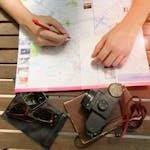
Pre-trip research should be interactive. Watch travel vlogs together, cook a dish from the destination, or map out the journey using a globe. A paper map for tracing the flight path can make an 18-hour leg feel far less daunting to a child. This approach builds excitement and gives kids a sense of ownership, which drastically reduces the “Are we there yet?” whining that plagues even the most well-planned trips.
Need to know what travel insurance actually covers? When to Buy Travel Insurance and What to Compare →
End this phase with a family meeting to finalize the itinerary. Let your kids choose one activity they want to prioritize, whether it’s a beach day in Bali or a visit to a wildlife sanctuary in Costa Rica. This small act of autonomy makes them feel like partners in the adventure, not just along for the ride. And trust me, when they’re 20 and reminiscing about childhood, they’ll remember the times they felt like part of the team.
Master the Paperwork Before You Pack
Passports, visas, and customs forms might not sound thrilling, but they’re the bedrock of a stress-free international trip. Children’s passports run on a shorter cycle than adults’, and discovering one expires weeks before departure is a common and entirely avoidable shock. It is also worth knowing that toddler passport photos require a plain, unpatterned background, a detail that catches many parents out. Don’t let this happen to you: check all passports at least six months in advance, and remember that many countries require passports to be valid for six months beyond your departure date, though Schengen Europe requires only three months.
Visa requirements are equally critical. While the U.S. passport grants visa-free access to over 180 countries, many others require pre-approval. Requirements also move. Thailand, for example, has revised its visa-exemption terms more than once in recent years and now asks arrivals to file a digital arrival card shortly before travel — a step that is easy to miss precisely because it is not a visa. Entry rules vary by nationality: US citizens do not need a visa for short stays in the Schengen area, but many other nationalities do, and some destinations require additional documentation for a minor travelling without both parents. To avoid this, create a shared digital document with all your family’s passport numbers, visa deadlines, and entry requirements. Apps like iVisa or the IATA Travel Centre can automate much of this, but never rely solely on third-party tools—always cross-check with official government sites.
Enrolling in trusted traveler programs can save you hours at the airport. Global Entry costs $120 for a five-year membership and gives expedited customs screening at dozens of U.S. airports, plus a number of international preclearance locations. Families with Global Entry routinely clear customs in minutes while others queue, which matters a great deal more with tired children in tow. For younger kids, consider the TSA’s PreCheck program, which lets you keep shoes and belts on during security. The application process takes weeks, so apply early—ideally 90 days before your trip.
End this section by creating a digital and physical copy of all documents. Store scanned passports, visa confirmations, and travel itineraries in a password-protected folder on your phone. Print a color copy of each passport and store it separately from the originals. And finally, teach your kids their full name, birthdate, and emergency contact information—yes, even the 3-year-old. It’s not paranoia; it’s preparation.
Pack Like a Pro: Essentials and Space-Saving Hacks
Packing for a family of five to Tokyo is different from packing for two to Paris. The key is to balance practicality with flexibility. A useful packing principle is to pack like you are moving but carry like you are travelling light.his means using packing cubes to organize clothes by category (e.g., separates, layers, toiletries), but limiting the total number of items to what you can comfortably carry in two checked bags and one backpack per adult.
For kids, the essentials are non-negotiable: at least two complete outfits, a raincoat, a comfort item (a familiar blanket or toy), and a stash of snacks. A reliable tactic is a dedicated snack bag, held back for emergencies: chocolate, fruit snacks and granola bars. A portable tablet loaded with kid-friendly shows and audiobooks earns its place, but download the content offline—airplane Wi-Fi is unreliable and expensive.
Space-saving hacks are crucial. Roll clothes instead of folding them to maximize bag space. Use shampoo bars instead of liquid toiletries to avoid leaky containers. For younger kids, a cross-body bag with a built-in document pocket (like the Pacsafe Anti-Theft Crossbody) keeps passports, tickets, and snacks accessible without requiring you to juggle a stroller, diaper bag, and your child’s hand. And for heaven’s sake, leave the bulky toys at home—kids are more adaptable than you think. A cardboard box from the hotel can become a treasure chest on a rainy afternoon.
Finally, create a “grab-and-go” kit for the airport: hand sanitizer, wipes, a change of clothes, and a small first-aid kit with pain relievers and antihistamines. This reduces the panic when your toddler spills juice on their only clean shirt mid-flight. Remember, the goal is to pack smart, not heavy, so prioritize what you can buy locally over what you must bring.
FAQ: Answering Your Most Pressing Questions
How early should I check passport validity?
Check all passports at least six months before departure. Many countries require passports to be valid for six months beyond your exit date, while Schengen Europe requires three months, and processing times for renewals can vary wildly. For example, the U.S. Department of State currently lists routine processing at 4–6 weeks and expedited at 2–3 weeks for an extra $60, with mailing time on each end on top of that.
What are the best snacks for long flights with toddlers?
Opt for non-perishable, mess-free options like dried fruit, pretzels, and single-serving chocolate bars. Avoid anything with strong odors or that requires refrigeration. Filling a snack box with one sweet, one salty, one crunchy and one chewy option keeps children engaged.
Is Global Entry worth it for families?
Yes, especially if you travel internationally more than twice a year. At $120 for five years it works out to about $24 a year, which is modest against the hours saved at customs — and a Global Entry membership includes TSA PreCheck. Global Entry and TSA PreCheck together can save a family several hours across a single long trip.
What if my child gets sick abroad?
Pack a basic first-aid kit and research local hospitals or clinics at your destination. The CDC’s destination health pages list what to prepare for before you go, and are a better starting point than any single app. Saving local emergency numbers and your insurer’s overseas line to your phone before departure can help you find pediatricians and pharmacies. If your child needs emergency care, contact your embassy for assistance with language translation or medical referrals.
Disclaimer
This article is for informational and educational purposes only. Always verify current travel information, visa requirements, entry rules, and health guidance with official government sources and qualified professionals before making travel decisions.
Your next step
Plan a Family Vacation Everyone Will Enjoy →